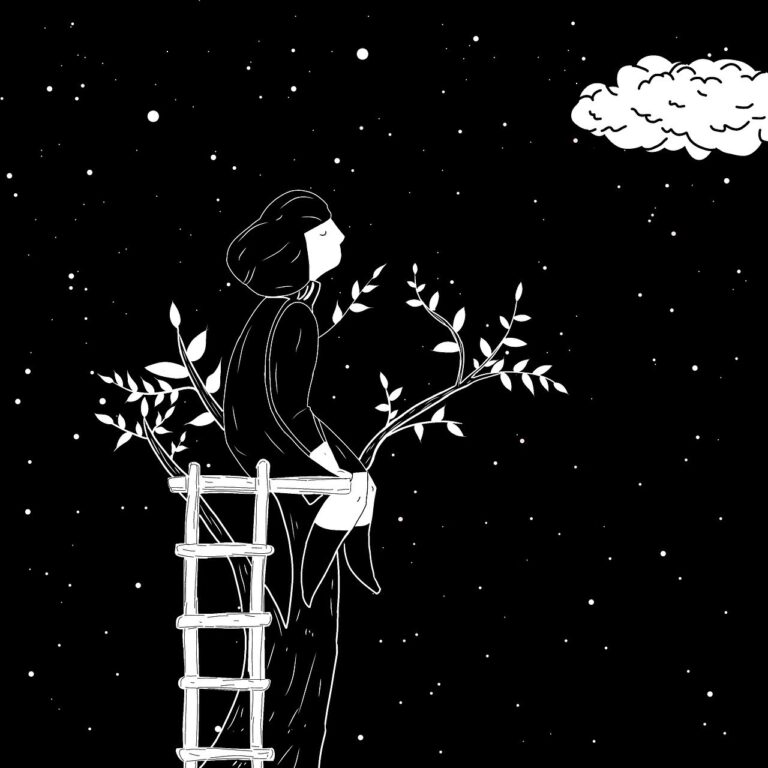

The saying “you can’t take it with you” is true–when we die our earthly possessions remain behind. When our parents die, we are left with things. Objects that require our attention. Physical memories. Apartments or houses full, and perhaps even storage units. Sorting your parent’s stuff after they die can be a daunting task. In this post we’ll talk about getting through this process if you are doing it yourself, some thoughts and things I learned along the way, a few specifics about certain items, and what it was like for me as I sorted my mom’s stuff very soon after she died, under pressure and truly in the middle of heavy and raw grief.
Must-have memories.
It felt wrong walking into my mother’s house so soon after she died. Every other time I had walked through that door she was there. With a hard lump in my throat I walked from room to room, knowing I could look and look but wouldn’t find her. She would never come back to this house again. It was hard to breathe. She was gone, and yet her presence hung over the place like a weighted blanket, one that literally pulled me to the floor several times, where I pressed my hands and forehead into the carpet, leaving tears behind, marking each room with grief.
My first step was breathing. In and out. Just trying to ground myself and feel calm enough to do my job. I decided to start with finding and retrieving the most important items first. I cleared the kitchen table and let my brother know that the things I’d keep would go there. He set up a staging area for himself in the living room.
I searched for her wedding ring. The coroner said they left it for me on her dresser, and I found it there. I almost didn’t recognize it–the slim and usually shiny gold band with a row of inlaid tiny sparkling diamonds was crusted over with dried blood from when she fell. I cleaned it until it sparkled again standing at her kitchen sink, looking out of the window where she used to watch for hummingbirds.
Sentimental treasures.
After my mom divorced my dad long ago, she was finally able to keep some of her own money. She started slowly collecting vintage jewelry and special pieces she liked. It was a luxury she never had as a wife and mom with young kids, since money was always a problem. Over the years she squirreled away a small collection of silver Tiffany pieces designed by Paloma Picasso. She always said the jewelry would be mine one day, and I searched her bedroom until I found a metal box under the bed filled with her favorites and the most valuable ones.
I found them, Momma. They’re safe. I’ve got you.
Is it horrible that holding that box may have meant more to me than holding the polished wood box containing her ashes? It sounds like an awful thing for a daughter to say, but the box of shiny things she adored meant more to me. I couldn’t (and still can’t) think of my mother as ashes. To me she’s always been the shining jewel reflecting the light, not the remains of a fire meant to eliminate and burn her away.
It’s a big job.
If your mom and dad died without a will dictating their wishes for their possessions, your job is even harder. You may have to sort through a lifetime of stuff.
My mom kept things. As in, all the things. My grandparents lived through the Great Depression, so my mother learned to scrimp and save. She kept every plastic bag from the grocery store. My kid artwork from 1984. A bunny I made her from a cut out milk carton and cotton balls. Construction paper turkeys made from traced child-sized hands. That long sleeved tie-dye shirt I asked her to donate in 1999, which I found still in her closet in 2018. Her house was small but still overwhelmingly packed, and I had limited time to sort through everything she owned.
At the time I was angry that I only had three days to go through her things and select what I wanted to keep. I felt rushed and pushed, like I had to hurry up and get rid of her stuff, but in hindsight it was probably easier to have the time limit. It would’ve been harder to have an unlimited number of days, to give myself any amount of time to hold each object, to reminisce and cry over everything that she saved and touched and used.
Which do you think is easier? Would you rather have time to be flexible and patient with yourself, even if it’s potentially painful to drag out the process? Would you rather have a small window of time to make quicker decisions to get through the process faster? In reality, either way is potentially painful.
Be gentle with yourself. This is hard work.
You can’t keep it all. I think almost none of us reading this post have enough space or means to absorb and keep all of the belongings one person leaves behind when they die. And so you know going into this process that there will be some things you keep, but also a lot that you will donate or toss. You will have to let at least some of it go.
Each time I pulled items from my mom’s cabinets or shelves and moved them to a garbage bag, I felt a ton of guilt, even if it was actual, obvious trash like an unopened bottle of an odd flavor of salad dressing that expired several years prior. She definitely held onto things that didn’t have much or any life left in them, things that I couldn’t donate or knew no one would want. They went in the garbage. I felt pretty sick about it, because it was hard to throw away things my mom kept. Even starting with the obvious trash, the “easy” stuff, was difficult.
Things that normally could be left alone had to change. They had to go. She wasn’t coming back. She wouldn’t need the shopping list on the countertop or her pink cat eye glasses. Her travel mug sat waiting next to the sink, but she wasn’t there to bring coffee in the car and drive with me.
Get your family involved. Maybe.
My brother and I decided we would go through her house together and at the end of the three days, anything left would be donated. He and I sorted alone together, because with our particular situation I didn’t want anyone else inside the home where she had died. I felt protective of her and didn’t want to let anyone else in.
Your situation may vary, and you might have different or better relationships with family and friends that enable you to let people in and let them help. If so, absolutely do this! Help and support can be wonderful things, especially with such a momentous undertaking as sorting a lifetime of stuff.
Did you know you can also hire help?
Did you know that sometimes people hire an estate liquidator to come in, sort and assess the possessions left behind, and then handle the sale after? Of course there is a fee attached to services like this, but depending on your mental load with grief and life, as well as the load of items in your parent’s home, this could be a saving grace, especially for vintage antique furniture or high dollar items.
While I have not used a service like this either, I know that there are professional declutterers and organizers who will come into your home or your parent’s home to work with you as you sort items to keep, donate, toss, or whatever you choose to do with them.
The Art of Decluttering is a fantastic podcast created by Amy Revell and Kirsty Farrugia. These amazing women live and work in Australia, but I imagine there are services like theirs pretty much everywhere. Kirsty and Amy have several episodes related to death, sentimental items, and deceased estates that I found helpful. I love these two women so much and I’m thankful they take time to share what they know and have experienced with the world. I listen to them as I walk through my neighborhood or clean my house. They are relatable, pleasantly real, and funny. Listening to their stories and guidance feels like having a cup of tea with trusted friends.
Share the love.
It can be a wonderful thing to give important possessions to family members who want them and will use them or love them. I collected a box of my mom’s jewelry for my three nieces–a mix of fun costume jewelry and several nice pieces, and the girls enjoyed sifting through Grammy’s jewelry, trying it on, and choosing their favorites to keep. My mother’s Christmas nativity set, made by my grandfather for her in the 1960s, went to a cousin who has always cherished our family history. I knew she would take care of it and use it. In a time of such heavy sadness, it was nice to bring someone else a little joy.
Donating or giving your parent’s items gives them a new life. Even though you might want to hold on to things, to box them up and keep them close to you, it can be such a freeing and good feeling to pass them on to a new owner who will love them.
Things deteriorate. Plastic degrades. Metal rusts. Fabrics and paper yellow over time. Things kept in storage can crack or fade long before you think of digging them out of boxes to use them, and when you do eventually open boxes up to sit with these memories, it makes it even more painful to see that the items have wasted away.
I know it might be hard, but try to let as many things as possible go. Let these things have a new life.
There will definitely be things you really want to keep. An important rule or a guideline to follow in this case would be to use it or lose it. Don’t blindly pack up everything in your parent’s house in boxes and move it to your basement. I know the temptation is there, but keep reminding yourself that your parent’s belongings deserve to be treated properly. They should be used, loved, regularly appreciated, and placed in their proper home, whether that be on the mantle above your fireplace, with a new owner, in the donate bag, or even in the trash.
My goal when I sorted my mom’s stuff was to keep things that I would use, and then to use them up. I say that this was a goal, because I was grieving pretty hard, and I wasn’t holding myself to a standard of perfection. If there were things I couldn’t use right away, I still allowed myself the space to keep them, knowing that I would deal with the item and find its final home as soon as I was able. If you are unsure and you have adequate space, you can certainly keep some things and decide later, but consider creating a container for the “maybes” and stick to that boundary.
I learned about “the container concept” and so much more from reading Dana K. White’s amazing books. I’ve also watched pretty much all of her YouTube videos. She is literally a joy, adorably human, a little snarky, a bit forgetful at times, and very down-to-earth in a blunt, spilling the sweet tea with a Texas mom sort of way. I simply adore her, and her delivery speaks to my ADHD overwhelmed brain. Dana’s advice is absolutely invaluable if you are on a journey to simplify your home and help it to function better. I personally own and love (and frequently reread or listen to on Audible) the three books: How to Manage Your Home Without Losing Your Mind, Decluttering At The Speed Of Life, and her most recent Organizing For The Rest Of Us.
(*Disclosure: I only recommend products I would use myself and all opinions expressed here are my own. This post contains affiliate links that at no additional cost to you, I may earn a small commission.)
Do I need this item? Can it replace something I already own?
If you keep something that belonged to your deceased parent, use it. If possible use it up. I wear my mom’s jewelry now. I don’t keep it locked away. Perhaps one of the silliest things I couldn’t stand to leave behind were her Buffalo Bills reusable grocery bags. I am absolutely not a football fan. I often call it “the sportsball” simply to mess with friends and family who care deeply about the sport, as most Western New Yorkers do. Now I tote my groceries home here in Portland, Oregon inside her Buffalo Bills grocery bags. (I sometimes get strange looks in the checkout line!) They remind me of her in a mundane sort of way. I think of my mom every time I see them in the back of my car, which gives me a smile. One day they will tear or rip, and I will toss them out or recycle them, feeling good in the knowledge that I used them often and used them up.
Make use of technology.
Before you begin sorting your parent’s stuff, find a small to medium size cardboard box or bin to designate as a photo box or a memory box. Tuck in photos or papers or memorabilia that you may want to keep as you find them. You can scan them later into a digital format if you don’t want to keep the originals or simply to share with others.
Scanning all of my mother’s photos was definitely not something I was able to manage at the time since I hadn’t even buried her yet, but I knew that I wanted to have digital copies someday, so I started my own box to serve as a temporary home for all of the pictures as I sorted her things. It was a relief to get them all together in one neat and tidy location safely, consolidated rather than sprinkled throughout the house in frames, albums, and drawers.
Also remember to keep your phone or a camera with you when you are sorting. If you are on the fence about donating or giving away an item, you can always photograph the item and keep the image. Having that visual memory might just be what you need, versus having another physical object to maintain and keep. I took pictures of some of the things in my mom’s home that tugged at my heart, and now I can see the photos and feel those warm and fuzzy memories without having more physical things in my house that I need to move, to dust, or to worry about breaking.
Odd things might suddenly become sentimental.
When you sort through your parent’s stuff, there will likely be a thing or two that surprises you. As in, I knew I was keeping the photo albums, but when I saw my mom’s familiar, cozy, bright pink Starbucks hoodie hanging in her closet, I grabbed it and immediately pulled it over my head, despite the fact that it was August and the air conditioning in the stuffy house was broken. It still smelled like her perfume and was certainly leaving with me.
In this same manner I stuffed her blue fleece bathrobe into the bag of things I was tagging as mine. She used to change into comfy clothes and her bathrobe when she was done for the day, so when she wore it, she could relax and be happy. I needed that memory, too.
The previous Christmas I gifted her a massive pink suitcase, bright enough to easily be seen on the baggage claim belt at the airport and big enough to bring home all of the gifts and goodies we procured for the other grandkids. It hurt to take it. It meant that she would never travel to visit me again. Many items were like that…she won’t get to use this anymore.
I hauled that suitcase to the kitchen and began packing it with memories to bring home with me. I wrapped my grandmother’s vintage brown bean pot in my mom’s navy blue velvet Christmas tree skirt. I packed her tin recipe box, which contains a hilarious number of 1970s jello mold recipes. (People actually enjoyed eating shaped jello with pistachios, marshmallows, canned pineapple, or even things like vegetables, ham, or beef added?! MOM. NO!) I knew I’d never make those particular recipes, but I wanted her handwriting and her love of feeding people. I wanted to smile when I read her chocolate chip cookie bar recipe, where she made the effort to write in “1 cup chopped nuts” but then included a smiley face and the words “No! Oh, the horror!”
Some things you can let go of with ease.
There will be many items in your parent’s house that do not speak to you and or beg you to take them home. You’ll find some things you can place inside donation bags or boxes easily, and if possible I encourage you to work quickly, touching these things as little as possible. Don’t let your mind start thinking of what you could do or where is the best place for these things. With your potentially monumental task ahead, it’s helpful if you can work through a category or room or section and make swift decisions.
My mom’s closet was jammed full. Every drawer was packed to the max (with some requiring a bit of wiggling and shoving to close). She had also filled the spare bedroom closet and a dresser in there as well. I felt a sense of relief, progress, and almost satisfaction when I quickly stuffed clothing that brought up negative memories or feelings into the donation bags. This included clothes she put up with because she didn’t have money for better, smoke damaged items she held onto after our 1987 house fire, and anything else that made me sad, such as the clothing and shoes she held onto for the fantasy life she always wanted, a life in which she could wear beautiful sparkling things all the time, rather than the life she had, a life of hard work, financial struggle, and mothering while hovering over the poverty line and just getting by. I always wanted to make her life better but never made the kind of money needed to give her everything she deserved.
Grief can make you do weird things.
For a while I was doing okay sorting my mom’s house, sticking to the big picture and big categories, trying to stay on track to finish the task in the few days I had. But at some point I got sidetracked and distracted by strange, small things.
I’d piled dozens of bags and boxes to donate, but suddenly I couldn’t leave behind the family sized variety pack of band-aids in her medicine cabinet. If one of the kids got hurt, I’d need a band-aid. Grammy had band-aids. I couldn’t throw away perfectly good band-aids. And so a portion of my precious carry-on luggage space was devoted to carrying 280 band-aids back to Oregon. It’s not logical. I know this. Grief is not logical.
In a similar vein, I plucked her refrigerator magnets off one by one. These little personal bits of her life called me to scoop them up and keep them safe. They surely would have been deemed trash by donation people coming through the house later.
My mom kept a bin of Lego for the grandchildren to play with when they visited, and I spent quite some time sifting through that bin for a minifigure wearing a red helmet covered in white stars. My son had gravitated to that little helmet ever since he was a tiny boy and played with it often. We had Lego at home and certainly didn’t need the whole bin, but that red helmet with white stars went directly into my purse. When I later placed it into my son’s palm, a wide smile split his face and his fingers closed around the star helmet like it was a precious jewel rather than a tiny plastic toy.
Sometimes it might be a seemingly ridiculous thing that matters to you and recalls a treasured memory of your mom or dad. Sometimes those small and silly things can be some of the best to keep your loved one in your heart.
Sometimes it’s hard to let go, but you must.
In high school theater I performed the role of Alice in a play called You Can’t Take It With You. That phrase usually alludes to the fact that no matter how much material wealth one can amass on earth, when you die it stays behind. You can’t take it with you when this life ends.
Our parents couldn’t take it with them. They left their messes as well as their treasures behind for us to deal with. I’m sorry to say, but most likely you can’t keep it all. Depending on how much space or means you have available, of course. I certainly did not have enough space or bandwidth to move all of my mother’s personal belongings to my house, so some things inevitably were left behind. (And even if I could have brought everything, it would have been just too much, too overwhelming.)
My mom died when I was on vacation in Florida with my two kids, and so I flew directly from Florida to New York to make her funeral arrangements. We had only packed one small backpack each in an attempt to make a simple minimalist trip to the beach. And so I arrived to bury my mother with nothing but two pairs of shorts, a few tank tops, one hoodie, and the flip flops I was wearing. We arrived in New York as carry-on only minimalists and flew back to Oregon laden with checked baggage–my mother’s old luggage packed full of memories.
Since I only had those couple of suitcases and it didn’t occur to me to ship anything, I had limited space. I left a lot behind that I may have taken if I lived within a reasonable driving distance of her. In the end this was probably a good thing, because I would have taken so much more, but instead I was forced to focus on the very best memories, to choose what was most important to me, rather than to simply load it all up.
I left behind her solid wood, hefty beast of a 70s vintage coffee table with the black stone inlay in the center. When I was little she kept realistic looking plastic grapes in a black glass bowl on the coffee table’s open bottom shelf. I’d squeeze the grapes and pull them off the stems when she wasn’t looking.
I left behind the massive dining set she crammed into her small space–the first new table and chairs she owned and got to choose herself. Toward the end of her life, she finally had something that wasn’t second hand, partially broken, scratched or chipped. My mother’s love language was food. She fed the people she cared about and always wanted more chairs and a large wooden table.
I left behind all of her dishware. My mother could ease your hard day with a bowl of warm soup and garlic bread. She soothed stress and overwhelm with a scoop of ice cream or homemade cookies piled on a sandwich plate. Her dishes held her love and care, and it stung to leave them behind. She and her husband lived alone but had enough dishes to cater a large event–stoneware in sunset colors patterned with bold sunflowers, daintier white dishes edged with delicate pink and blue designs, mugs deep enough for an enormous cocoa that took two hands to hold, and countless coffee cups with photos of bright-eyed grand babies.
I knew I couldn’t bring it all with me. As much as I wanted to grab everything and hold it close to my heart, I knew clinging on so tightly wouldn’t bring back what was missing.
Things I felt bad about leaving behind. Grief guilt.
My mother had a slim glass curio cabinet filled with fragile ornaments, figurines, and special mementos she loved. After her husband died and she started to gradually let go of life herself, on occasion she’d mention her cabinet and ask me if there was anything I wanted in it. Everything in there is for you when I’m gone, she’d say. I always avoided answering and moved the conversation forward, because I didn’t want her dwelling on giving away possessions when she had a life to live. I didn’t realize how close she was to leaving me.
I left behind everything in the curio cabinet. Maybe it was a rash decision, but it was too much pressure. Pretty, fragile things behind glass. I would break them. I couldn’t keep them whole. Her pink, footed Depression glass sugar bowl and its tiny lid. The porcelain occupied Japan figurines my grandfather brought back from WWII (my sister-in-law kept them). The Marilyn Monroe keepsakes. Her wedding bouquet from her second marriage (the one that made her happy at last). I don’t think I’ve ever seen a bigger smile on her face than that day in July 2005. She was loved. She felt loved. At last. That bouquet stayed behind the glass doors after she died. Her love died unexpectedly, and ultimately it killed her. I couldn’t bring that home with me. I’m sorry, Mom. I know you wanted me to have those things, but I couldn’t even open the cabinet door.
Being in the house was hell.
When my mom died I almost possessively assumed the role of Protector Of Her Things Left Behind. Her husband’s adult kids would fully empty the house working with a donation service. They are good people and loved my mom, and yet I still felt defensive, like I needed to be there first to sort her belongings and respect her dignity, since she wasn’t there to do it herself.
Maybe once we die we don’t care what happens to what we leave behind on earth, but it’s normal and human to think ahead of time about that snapshot of our home and our life. Ideally we want to leave behind an orderly life. Not piles of bills on the countertop, a sink full of dirty dishes, or a thrice reheated half cup of coffee languishing in the microwave.
Alas, we are human and we live in our homes, and my mother’s house was anything but orderly. In those early days of spinning grief, deciding I was there to help my mom with her house gave me something concrete and logical to hold onto. I bagged obvious trash. I bagged donations of things that I didn’t feel good about anyone else handling until it was out of the house. The act of clearing and sorting felt private and personal, and I wanted to be there to guard this process for her. Or perhaps it was for me. It felt right in the moment.
Of course simply being in the empty house was hard enough. In fact, being in the house she died in was hell. Hell in August with broken air conditioning. The smell of death lingered in the air. The house was infused with it. There was an antiseptic odor from the chemicals the house cleaners used to scrub away the blood and fluids that had seeped into the wall-to-wall carpet. Though they tried to erase the evidence that a death happened here, their chemicals didn’t fully cover or remove the sickly sweet smell. I was torn between feeling disgusted while inhaling, nauseous as I breathed the scent of death in and out of my lungs, and feeling guilty that I was so repulsed and felt an urge to run away from the place where she died on the floor. With deep breaths it seemed like I was inhaling particles of her, of my mother and her death, as if her life floated around me like dust motes by a sunny window.
I cried about the dignity lost in death. An elderly body lifeless on the floor. Found by strangers. I wondered if her skin had looked purplish gray next to the blood that pooled where she hit her head. I thought about the dried, congealed blood tangling her hair.
When a human body dies, it begins to decompose. Chemical reactions and enzymes break down and eat damaged cells. Gravity pulls soft tissues, gasses, liquids, and salts down and out of the body. A body that was beautiful in life, a person who once laughed, found stiff and cold on the floor, almost close enough to reach the phone.
The experience of it all. A dose of guilt and realization.
On the last day of sorting through my mother’s belongings, the whole process felt so rushed. And it was. It made her real and valuable human life feel like a thing that could be sorted and done away with in just three days. Boom. Done. Evidence removed. It hurt.
Was I throwing away pieces of her? Should I go through all of those black bags again and pull things out to keep? How could I give away her things and haul so many bags out for trash pickup?
I asked myself these questions in a panic as if it would help me hold onto her or love her or keep her alive. It stung like a betrayal, like my mom was done. Over. I’d swept the bits and pieces of her daily life into contractor grade garbage bags as if my job was to leave no trace. Throwing away a Post-It note with her handwriting felt like being stabbed with a rusty dagger. It was all so unfair.
But physical items don’t keep us alive. They don’t even keep the memories alive. The mother I needed and grieved was not inside any of the objects I handled, even if she was the last person to hold them. Even if I swore I felt her touch when my hands pressed on the echoes of her fingerprints. Yes, an item is a physical reminder, but the memories, the stories, and the feelings are within our hearts. That’s why it hurts so damned much.
I sat there sorting, wearing her fleece bathrobe on top of her oversized Starbucks sweatshirt, with my hair wrapped in a vintage gold and pink swirled silk scarf I found in her dresser, with random bangle bracelets clinking together on both arms. I did my job. I got through almost everything in three days.
Some things were unbagged, left for the donation service to manage, but I’d packed the essentials to come home with me, to keep close to my heart, to cry over and hold when I needed to feel her close to me. The task certainly wasn’t done to perfection, but it was done, and that realization brought on another round of sadness, knowing that never again would I be able to walk through my mom’s front door into her kitchen with the wallpaper printed with tiny red apples. Never again would I see the little pewter lighthouse with the crystal on top that she used to hold her rings when washing dishes by hand. I had to clean up her home and close the door. Permanently.
I flew home planning to declutter my own house, thinking of what I have and what I will leave behind. I felt renewed energy to organize my own life and simplify, thinking of my children someday sitting around piles of my own things, wondering what in the world to do with them.
I’m so curious to know what others have experienced. Maybe you didn’t get to sort anything or take any memories home? Maybe you chose not to? Maybe you took it all? Did you nod your head as you read along with my retelling, or was it totally different for you? What was the hardest part of dealing with the things your parent left behind?
If you connected with this post, please subscribe so that you’re notified when new content is published. Also, comments are wonderful and much appreciated–add them below so that others can hear your story, too.